Additional Service Areas

Differences Between Drip Irrigation & Sprinkler Systems
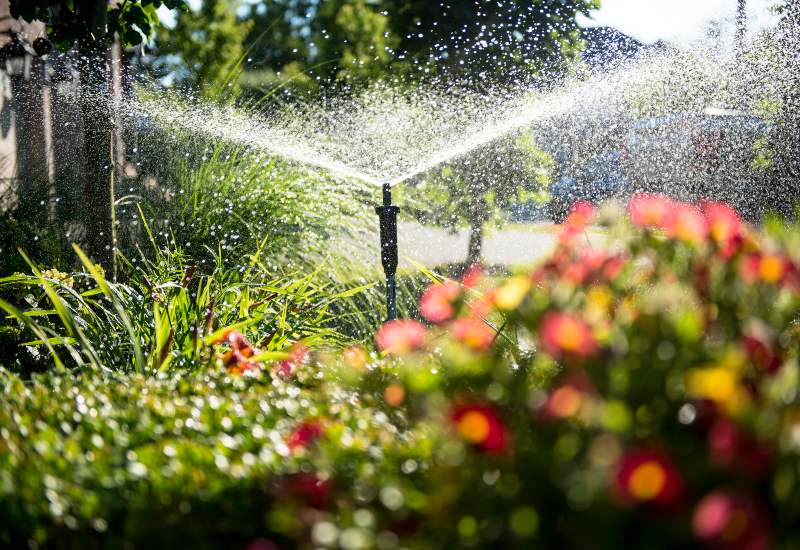
Drip Irrigation vs Sprinkler System – Which Is Right for Your Property?
Do you wonder which irrigation system will work best to hydrate your greenery? Your lawn and landscape depend on a reliable water source to stay healthy, and you have multiple options for installation. Absolute Lawn Care and Landscaping understands how crucial your irrigation investment is and works with you to determine a solution that fits your property’s watering needs and your budget. Drip irrigation is a common option that delivers water directly to your plants, while sprinklers remain popular because they spray water over grass blades, plant leaves, and soil.
What Is Drip Irrigation?
Drip irrigation is a precise watering method that delivers moisture directly to the base of your plants, rather than spraying it broadly across the landscape. Instead of soaking foliage or losing water to evaporation, this system uses a network of flexible tubes with small emitters that slowly release water as drops directly into the soil near the root zone. By keeping the roots consistently moist without over-saturation, you dramatically reduce waste and prevent fungal diseases common with overhead sprinklers. In the humid, heavy clay soils of Houston, Texas, drip irrigation is most effective during the scorching summer months or periods of drought restrictions. This method ensures your flower beds and foundation plantings stay hydrated deep down in their roots, even when the surface soil cracks under the intense Texas heat.
What Is a Sprinkler System?
In contrast to localized drip methods, a sprinkler system is an automated network of pipes and pressurized heads that distributes water across expansive landscapes, mimicking the effects of natural rainfall. These systems operate by drawing from a main water supply and using valves to direct water to specific zones, where pop-up heads or rotors spray droplets over the grass. In Houston’s Gulf Coast climate, traditional sprinklers are most valuable during the spring and autumn growing seasons, when large lawns require uniform coverage to remain lush. To maximize efficiency amid the city’s high humidity, it is best to run these systems early in the morning, allowing moisture to soak into the grass before the brutal midday sun triggers rapid evaporation.
How Are Drip Irrigation & Sprinklers Different?
While traditional spray methods dominate many Texas yards, understanding the fundamental differences between drip irrigation and sprinkler systems is essential for sustainable property management. Drip irrigation delivers water directly to the root zone through low-pressure tubing, whereas sprinklers spray water through the air to cover expansive surface areas. Navigating these technical choices can feel overwhelming for many homeowners. Fortunately, the professional team at Absolute Lawn Care and Landscaping is ready to guide you through the complexities of each setup. We take pride in explaining the mechanics and benefits of these diverse watering solutions, ensuring your specific landscape thrives. Below are examples of the differences between the two systems.
- Water Delivery Method: Sprinklers use pressurized heads to throw water across the lawn surface, while drip systems use small emitters to leak water directly into the soil slowly.
- Evaporation Rates: Drip irrigation significantly reduces water loss because the liquid’s never airborne, unlike sprinklers, which lose moisture to Houston’s wind and high heat.
- Target Accuracy: Drip lines are ideal for precise applications in flower beds or gardens, whereas sprinklers are designed for broad, uniform coverage of large turf sections.
- Weed Prevention: By only soaking specific plant roots, drip systems help discourage weed growth in surrounding dry soil areas.
Factors to Consider Before Installing Either System
When deciding between a drip irrigation system and traditional sprinklers for your Texas landscape, several environmental factors should influence your final choice to ensure long-term efficiency. The erratic Gulf Coast weather patterns and intense summer sun mean that a one-size-fits-all approach rarely succeeds. Homeowners must evaluate their specific soil drainage, local wind intensity, and the unique hydration requirements of their existing plant life. Balancing initial installation costs against monthly utility savings is also vital. Ultimately, selecting the right technology involves analyzing how water interacts with your particular patch of earth to create a sustainable, lush, and water-wise outdoor environment. Before committing to a specific watering setup for your Texas landscape, please consider the following essential factors:
- Zonal Hydration Needs: Group your native perennials separately from thirsty turfgrass to avoid overwatering sensitive root systems.
- Soil Composition: Heavy clay absorbs moisture slowly compared to the sandy loam found in East Texas, dictating your required flow rate.
- Wind Pattern: High gusts in open plains can blow away fine sprinkler mist, making low-profile drip lines more efficient for consistent saturation.
- Local Restrictions: Review municipal drought stages because drip systems often bypass the strict “twice-a-week” runtime limits imposed on traditional spray heads.
Deciding Which System Is Right for Your Property
Deciding between a traditional sprinkler system and a modern drip irrigation line can feel overwhelming. Absolute Lawn Care and Landscaping has simplified this choice for hundreds of homeowners across the Houston metroplex. Our team recognizes that every yard tells a different story. While high-pressure sprinklers are fantastic for quickly covering sprawling lawns, they often lose significant amounts of water to evaporation and wind drift. Conversely, drip irrigation excels at delivering moisture directly to thirsty roots in flower beds, though it requires more diligent maintenance to prevent emitter clogs. Ultimately, neither system is inherently superior. The correct choice hinges on your specific landscape arrangement, soil drainage, and financial goals. We help you weigh these trade-offs and install a custom solution that prioritizes plant health and long-term utility savings.
Contact Absolute Lawn Care and Landscaping for Service
Absolute Lawn Care and Landscaping looks forward to working with you to mow your lawn, design a beautiful garden, and generally improve and maintain your lawn and landscape’s health and appearance. We proudly serve residents in various Houston-area communities, including Alief, the Astrodome area, Braeswood, Central Southwest, Downtown Houston, Fondren Gardens, Fort Bend Houston, Montrose, Quail Valley, South Park, and Sunnyside. If you need to install a new watering system at your property, we’ll gladly use our expertise to advise you on whether it would benefit more from drip irrigation or a sprinkler system. Let us help you perfect your outdoor spaces with comprehensive lawn and landscaping solutions. Reach out to us today for more information and to start your lawn, landscaping, or irrigation project.
Drip Irrigation & Sprinkler System FAQs
As a seasoned lawn and landscaping professional, Absolute Lawn Care and Landscaping values our clients’ trust and honors it with an unbeatable service experience. Insight is paramount when making decisions about caring for your outdoor spaces, and we ensure you have ample information and honest answers to all your questions. Below, we’ve answered a few of our clients’ most frequently asked questions about drip irrigation and sprinkler systems to start the process:
How Does Houston’s Heavy Clay Soil Affect My Choice Between Drip and Sprinklers?
Houston’s “gumbo” soil absorbs water slowly, making high-volume sprinklers prone to wasteful runoff. Drip systems are often better here because they deliver moisture gradually, allowing the dense clay to absorb it deeply without creating muddy pools or foundation issues.
Can These Systems Withstand the Intense Humidity and Heat of Southeast Texas?
Extreme heat accelerates evaporation, giving drip irrigation a massive efficiency edge during Houston summers. However, our humidity can encourage algae growth in lines. We can use UV-resistant tubing and specialized filters to ensure your hardware survives the brutal Gulf Coast climate.
Is One System Better for Local Water Conservation Mandates During Drought Stages?
During Stage 2 restrictions, drip irrigation is frequently exempted from specific day-of-week limits because it eliminates wind drift and overspray. This flexibility allows you to keep your landscape lush and vibrant even when traditional spray heads are strictly regulated.